

Traditional Rajasthani Food: What to Try & Where to Find It
A Taste Of Rajasthan: 8 Dishes That Recite The Story Of Rajasthan
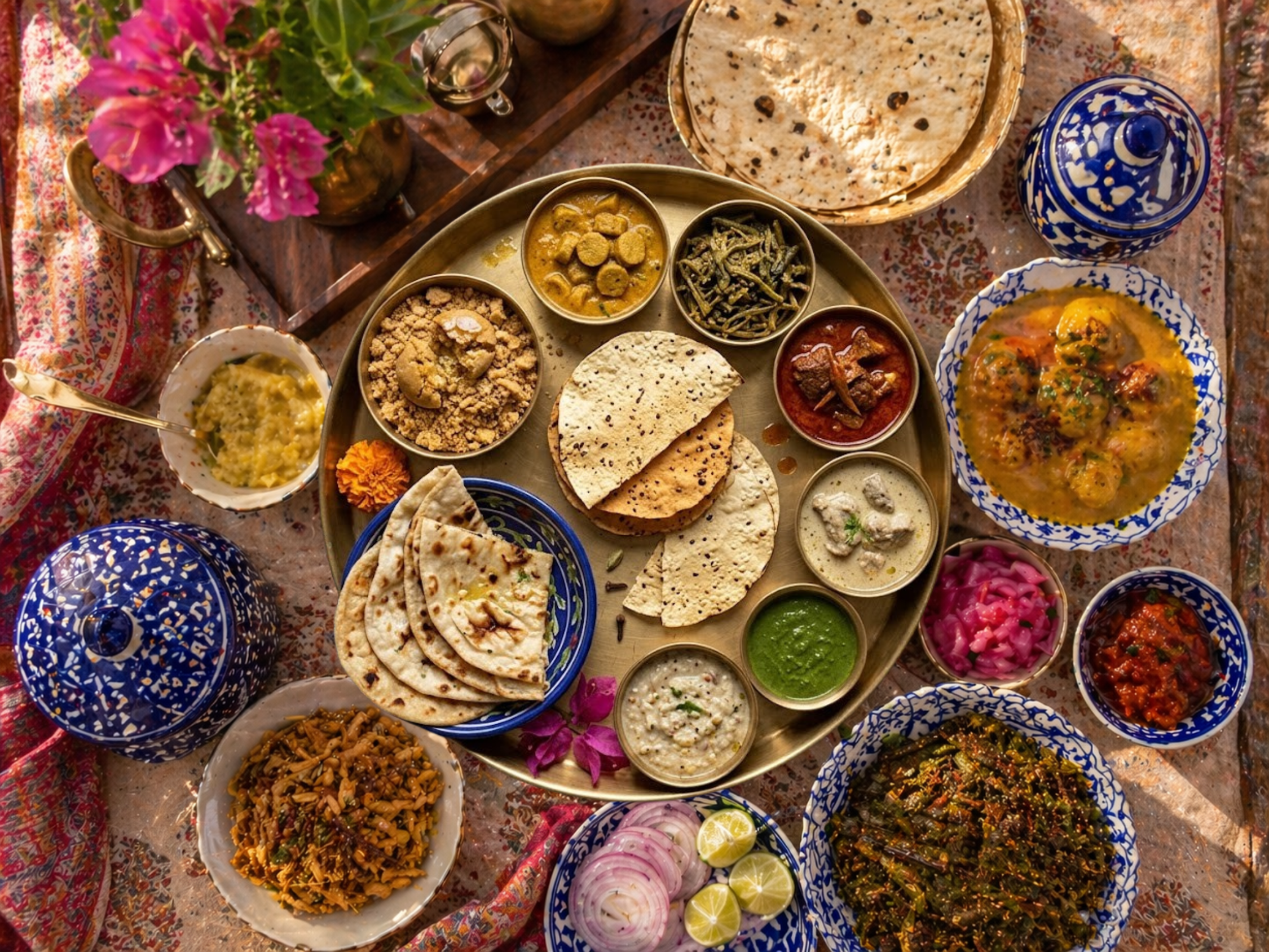
Rajasthan is not a faint place! It announces itself in heat, in colours, in the loud kindness of its people and the tranquil intensity of its land. But if you truly want to understand this stunning desert kingdom, then make sure you sit and eat. Meals here were never sustenance, but it was survival shaped beautifully into art. From scarce vegetables, scarce water, and scarce shade, Rajasthani cooking is a masterclass in creating the incredible from almost nothing. Ready to indulge in the flavours of Rajasthan? Here are the traditional Rajasthani food, which carry the soul of this culture in every bite:
1) Dal Baati Churma
The holy triad of Rajasthani cooking
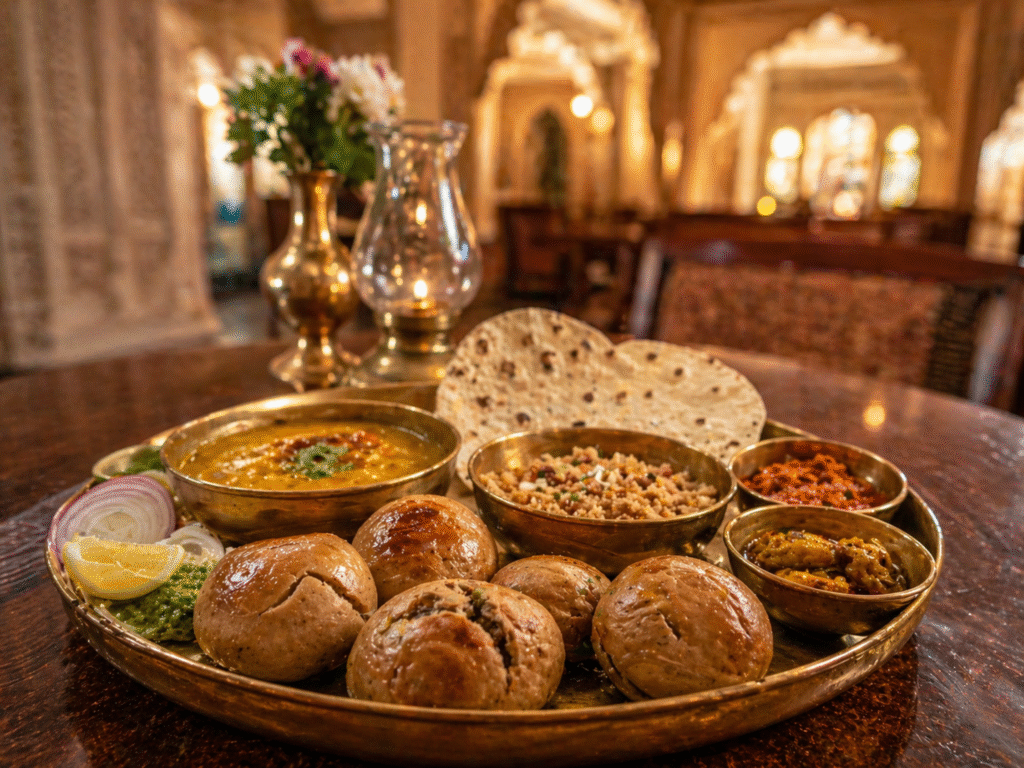
There is no cuisine more Rajasthani than “Dal Baati Churma”. This famous Rajasthani food arrives in three different yet deeply connected elements, which are rustic wheat rounds, earthy lentils and a sweet, crumbly, perfect finish. The baati comes from hard wheat, is shaped softly by hand and slow-baked over heat until its exterior turns perfect bronze while inside remains airy and soft.
The baati is later cracked open and drenched in ghee, prepared to be paired with slow-simmered dal, which carries layers of depth and spices. As soon as the savoury richness settles in, scrumptious churma follows, enriched with ghee, coarsely ground wheat, and jaggery, offering an indulgent texture and contrast. This dish is not a hurried plate of food, but it’s a savoury meal meant for shared spaces, unhurried conversation, and quiet rituals.
Where Locals Eat:
- Chokhi Dhani: Jaipur
- Aarogosa Restaurant: Jaipur
- Tribute Restaurant: Udaipur
Cultural Legacy:
Born from the practical creativity of Rajput warriors who needed food that could be baked easily in desert heat. Today, this dish holds a special place in the hearts of all Rajasthani people, served primarily in the most important moments, from the harvest festival to weddings, carrying history in every crumb.
Flavoury Experience:
The baati carries a perfect crust that yields with a crack. The dal is spiced and earthy with generous ghee. Lastly, the churma arrives crumbly, sweet, and almost warm, an almost perfect finale to a hearty meal.
2) Laal Maas
Delicious Red Fury of All Rajput Tables
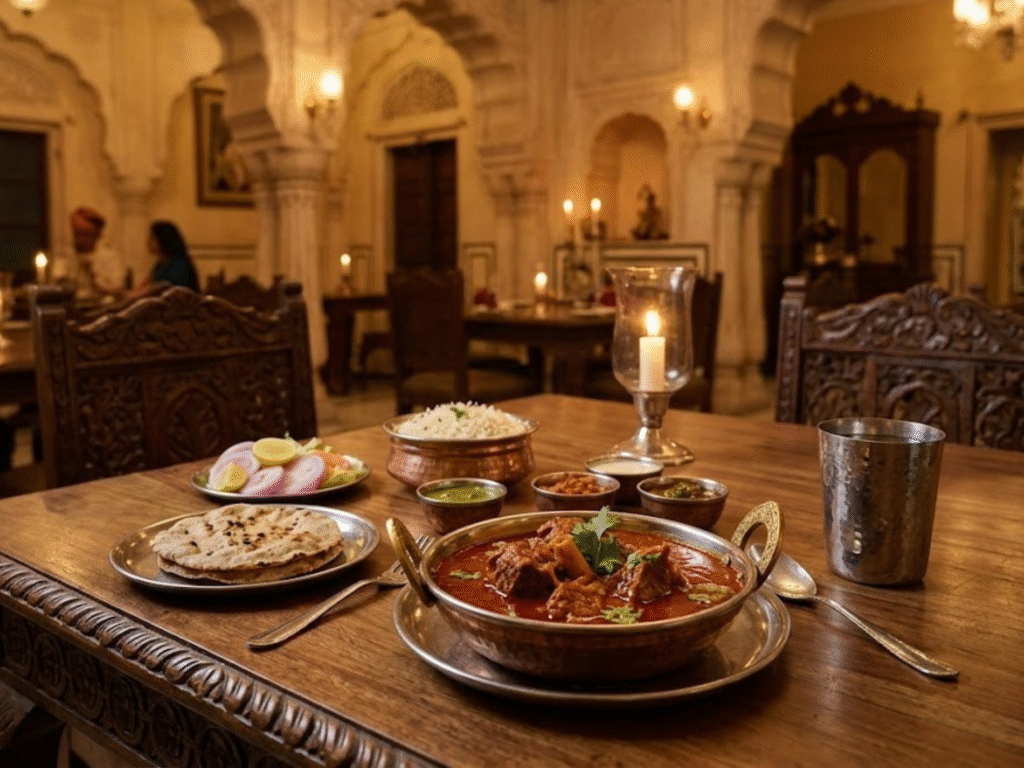
Laal Maas means red meat, and believe it or not, it earns every single letter of it. A delicious mutton curry so uncompromising, fierce, and deeply coloured that it attracts attention the moment it arrives on your table. The signature colour of Laal Maas does not come from tomatoes but from the Mathania chillies, which are grown near Jodhpur, which is famous for their smoky warmth and vivid hue. In older periods, this dish was hunting camp food, made on an open fire and savoured with bare hands by Rajput royalty coming back from a long chase. The sense of historic flavours still echoes through the dish, today refined into deliberately cooked gravy which is layered, unmistakably distinct and complex.
Where Locals Eat:
- 1135 AD: Jaipur
- Ambrai- Amet Haveli: Udaipur
- Risala at Umaid Bhawan Palace’: Jodhpur
Cultural Legacy:
A meal of Rajput royalty, earlier made with wild game after a long hunt. Though mutton has superseded game over time, the essence of the dish is still fiery, intense, and remains truly unchanged.
Flavoury Experience:
The meat falls apart in gravy filled with spices, ghee, and later laced with chilli warmth that wavers long after the meal ends. This dish holds a deliberate, slow heat that flares with each bite.
3) Gatte Ki Sabzi
The Quiet Luxury of Rajasthan
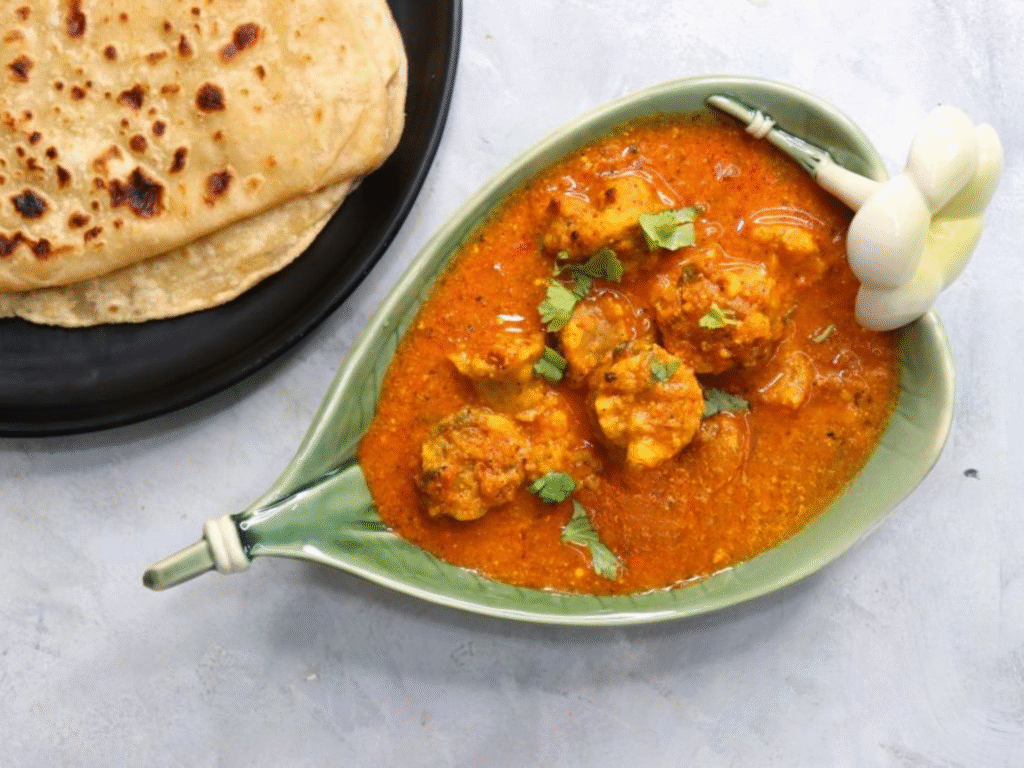
In a land where fresh vegetables and fruits were never guaranteed, Rajasthan did not adjust, but it invented. Gatte Ki Sabzi is a creation that came not out of abundance but ingenuity. This is the best traditional Rajasthani food in Jaipur, prepared from gram flour dough. Gatte are shaped softly by hand, boiled, sliced, and then simmered in a savoury and tangy curd-based curry. This is a vegetarian dish of incredible depth, the taste that makes you forget it came from necessity. You will find the version of it everywhere, from grand thalis to modest homes, always slightly different yet always quietly satisfying.
Where Locals Eat:
- Virasat Heritage Restaurant: Jaipur
- Suvarna Mahal-Rambagh Palace: Jaipur
- Suryagarh: Jaisalmer
Cultural Legacy:
An amazing reflection of Marwari ingenuity, this dish stands as evidence that limitations can be a form of originality. With a few more kitchen staples, generations of chefs built layers of new flavours that persist to define Rajasthani cuisine.
Flavoury Experience:
Gatte are yielding yet dense with besan’s subtle nuttiness. The curd curry is warm and sour with dried chilli and cumin cutting through the richness beautifully.
4) Ker Sangri
The Flavour of the Thar Desert Itself
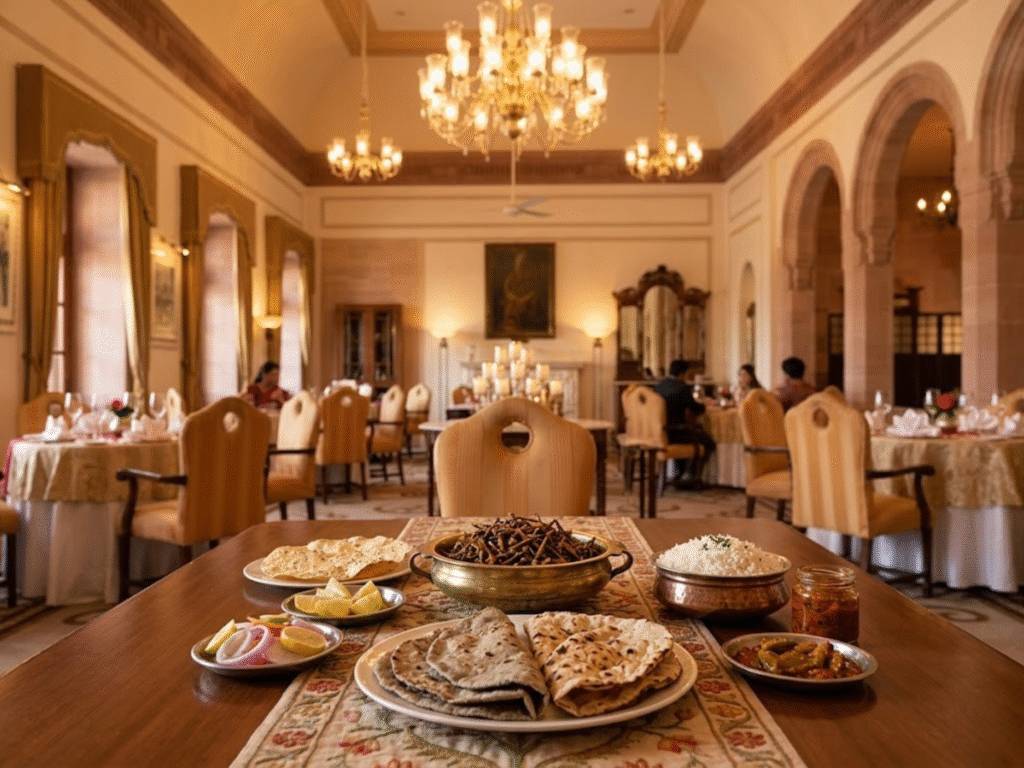
If there is one dish that feels inseparable from Rajasthan’s landscape, then it’s Ker Sangri! Ker, the wild small desert berries and Sangri- slender, long desert beans, are two elements that grow where almost no other ingredient will. Dried, then rehydrated, later cooked with raw mango powder and a handful of Indian spices, forming a sabzi unlike anything you can ever encounter in Indian cooking. This dish is slightly tangy, aromatic and entirely something new. Tasting it feels like exploring a secret that traditional Rajasthani food has been keeping hidden for centuries.
Where Locals Eat:
- Suvarna Mahal: Jaipur
- Cinnamon: Jaipur
- Risala: Jodhpur
Cultural Legacy:
A dish came from geography; these two desert plants are dried and stored through long summers, making them an invaluable lifeline for desert communities. Over generations, this essential evolved into traditions, a dish that continues to hold culinary and cultural significance.
Flavoury Experience:
Earthy, tangy and edged with a gentle bitterness, this cuisine is carefully balanced by a handful of spices that neither soften nor overpower its identity. It is dry and assertive, carrying a charm that lingers, a cuisine so singular that it remains within you even after the dinner ends.
5) Pyaaz Kachori
Where Morning Begins With A Crunch
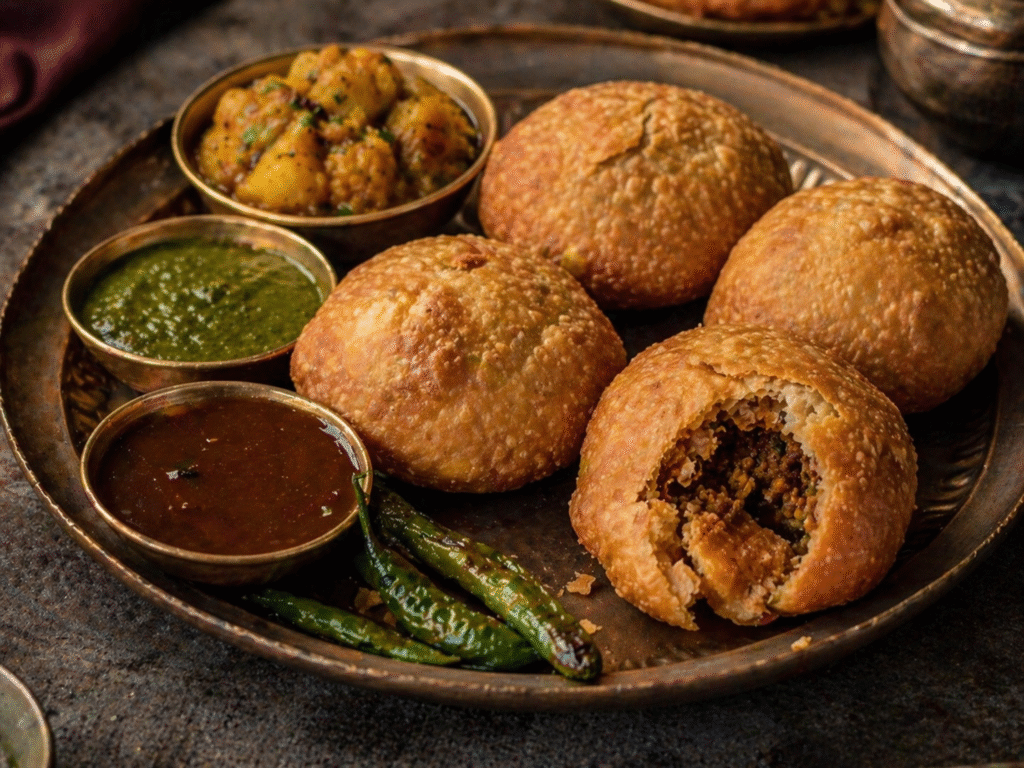
The streets of Rajasthan, mainly Jaipur and Jodhpur, wake up to the delicious smell of these. Perfect round, flaky pastry shells that are deep fried to a shattering crunch, filled with a spiced potato and onion mixture that is fragrant and soft inside. They are served on your plates with a glossy, hot texture with sweet tamarind sauce and mint coriander chutney on the side. In Rajasthan, eating pyaaz kachori with chilled lassi at famous local spots before nine in the morning is not just a normal breakfast, but it’s a happy, deliberate, unhurried ritual for them.
Where Locals Eat:
- Laxmi Misthan Bhandar: Jaipur
- Pillars at Umaid Bhawan Palace: Jodhpur
- Rawat Misthan Bhandar: Jaipur
Cultural Legacy:
A cornerstone of Jaipur & Jodhpur’s food culture, this traditional Rajasthani food mirrors the Marwari love for indulgent, layered snacks. This famous Rajasthani food is not normal street food, but it’s a famous tradition passed down through shopfronts and families.
Flavoury Experience:
The pastry shatters beautifully. A flaky, crispy crust, inside soft potatoes and onions, spiced with fennel, cumin, and chilli powder and also served on the side with mint green chutney and sweet sauce, which makes you feel sour, sharp, sweet and deeply satisfying all at once.
6) Ghewar
The Architecture Of Sweetness
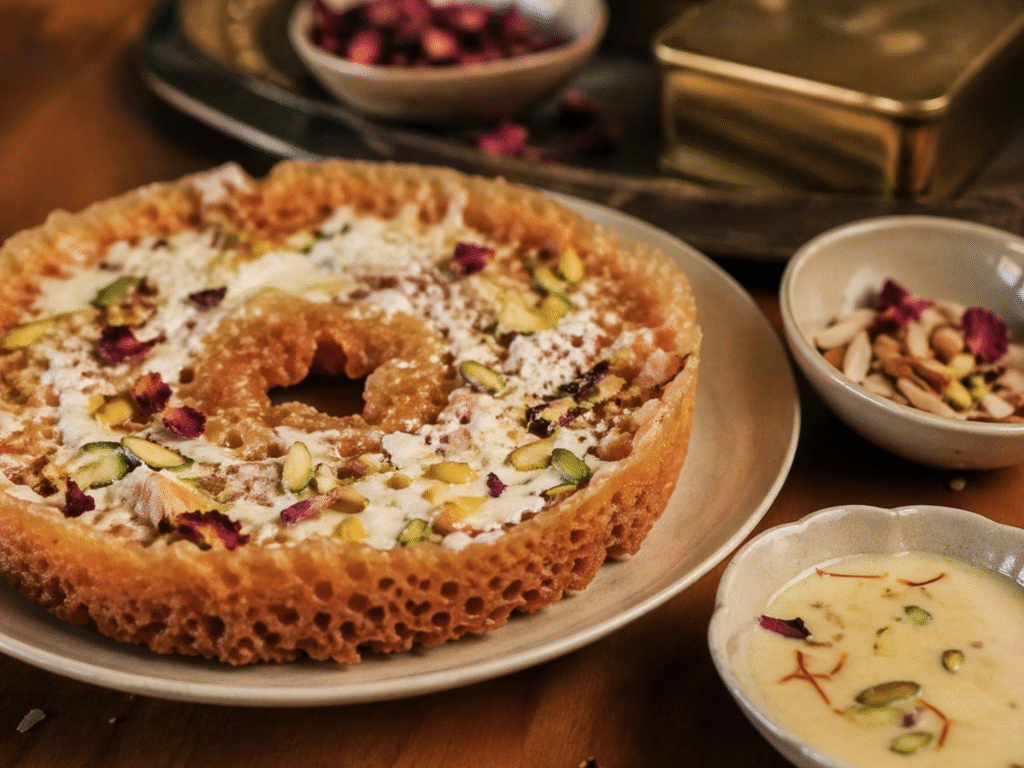
Ghewar is not just a sweet dish, but it’s a structure. Thinking, how is it prepared? No worries, a disc of gram flour batter is drizzled into hot ghee, which is shaped in a circular mould, layer by thin layer, till it forms a honeycomb lattice. As it comes from the hot ghee, it’s later soaked in sugar syrup and finished with crushed nuts and tempting rabri or a thin smear of beautiful silver vark. This sweet is deeply tied to time, to festivals and to seasons. During Raksha Bandhan and Teej, it’s not just eaten but gifted, shared and honoured with a sense of the event that feels almost ceremonial.
Where Locals Eat:
- Laxmi Misthan Bhandar: Jaipur
- Rawat Misthan Bhandar: Jaipur
- Jagdish Misthan Bhandar: Udaipur
Cultural Legacy:
More than a sweet, Ghewar carries tradition within its deep layers. Exchanged between loved ones, offered during rituals and festivals. It holds a place in festivity that goes beyond taste, evolving into a symbol of connections and continuity.
Flavoury Experience:
Crisp and light, yet rich with ghee, its sweetness is restrained but present. The tasty rabri adds dense and cool contrast, settling into the airy structure. An amazing pair that feels both deeply satisfying and delicate, unmistakably rooted in Rajasthan.
7) Bajra Roti
The Bread Of Resilience
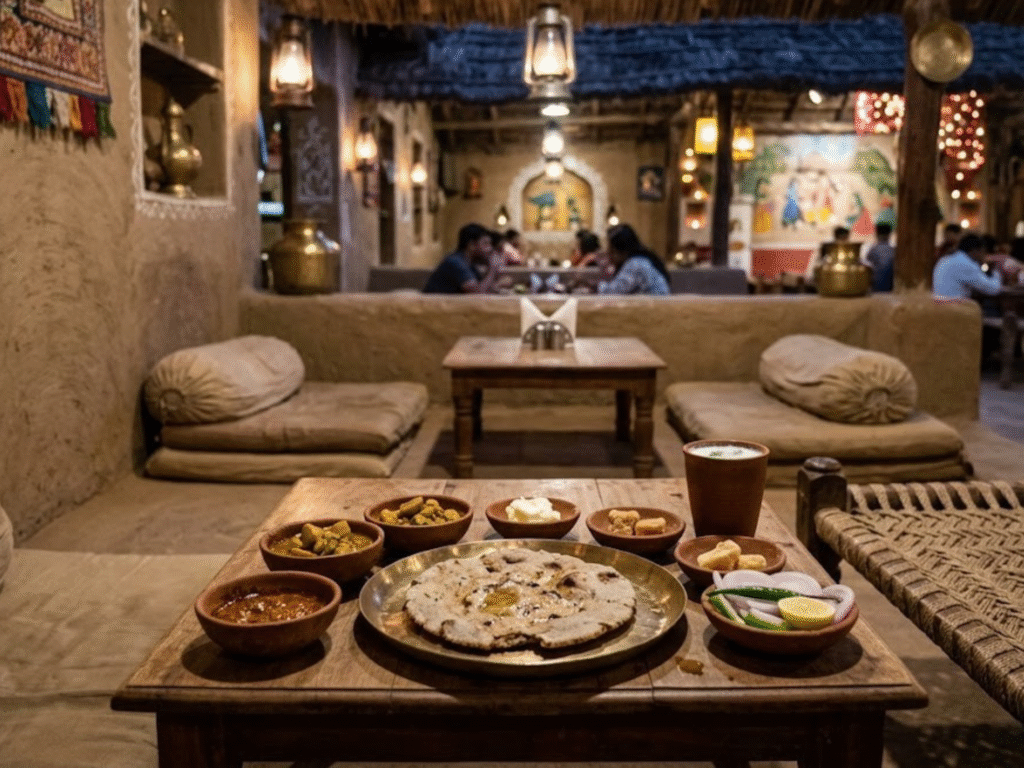
There’s a certain truthfulness to this bread that modern food rarely has! Made from pearl millet, a grain that flourishes when others fail. Bajra roti is shaped by hands softly, pressed without precision and cooked over an open flame until the bread develops a lovely rustic character.
What makes this roti special is how it feels to eat and where it comes from. It is simple yet satisfying, hearty without being super heavy, the kind of bread which may not overwhelm your palate but gradually wins it over.
Where Locals Eat:
- Chokhi Dhani Resort: Jaipur
- Suryagarh: Jaisalmer
- Devi Garh by Lebua: Udaipur
Cultural Legacy:
The bread of desert communities, farmers and locals for generations, cooling in summers, warming in winters, bajra roti has quietly sustained Rajasthani life for centuries.
Flavoury Experience:
Slightly smoky, dense, with a deep-grained taste, the white flour simply can’t be replicated. Also on the side, yummy garlic chutney brings, and the soft butter brings richness. Together, these 3 taste magnificently good.
8) Safed Maas
The White Counterpoint
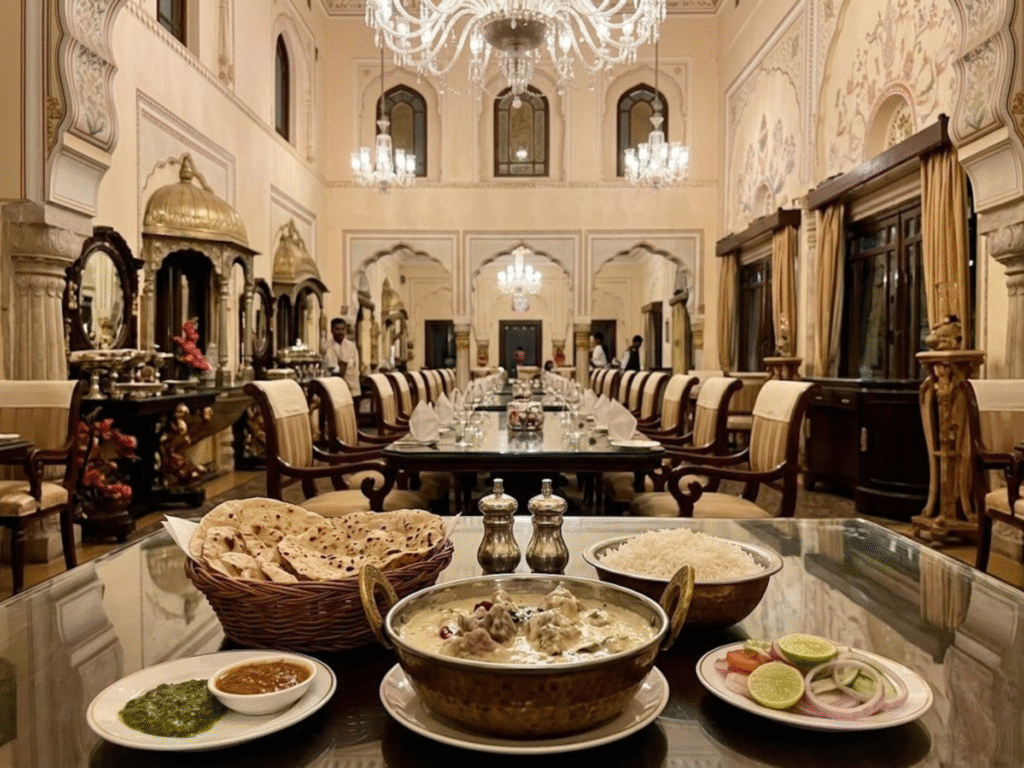
Where Laal Maas blazes, the centuries-old Safed Maas whispers. The proper royal mutton preparation moves away from colour and heat, embracing a velvet gravy built on cashews, yoghurt, and white poppy seeds. Every flavour is softened, and every element is measured not to simplify but to elevate. Cooked in the royal kitchens of Rajputana, this authentic Rajasthani food was meant to balance your table. A perfect traditional Rajasthani food that follows elegance with intensity.
Where Locals Eat:
- Swapna Mahal: Jaipur
- Sheesh Mahal, The Leela Palace: Udaipur
- 1135 AD Amer Fort: Jaipur
Cultural Legacy:
Born in Rajputana’s royal kitchen, this creamy dish was served at a banquet where contrast and variety of dishes were themselves a display of the host’s sophistication and power.
Flavoury Experience:
Rich and velvety, the gravy coats each piece of mutton with a deeply tasty creaminess without being heavy. Kewar and cardamom offer a floral lift, which tastes regal, elegant and restrained.
What Makes Traditional Rajasthani Food Truly Unique?
Most of the authentic food is built around abundance, plentiful water, fertile lands and seasonal variety. However, Rajasthani dishes were built around the opposite. What you see on your plate is not just normal flavour but a strategy. Ingredients were chosen for how well they “last”, and cuisines were designed to hold their history through centuries, and techniques were built around creating the most from very little.
Slow cooking, drying and preserving weren’t just methods, but they were traditions passed down over generations. Spices aren’t layered for intricacy alone but for warmth, balance and longevity. Ghee wasn’t there to impress but to nourish. To savour Rajasthani food is to understand that pure hospitality here is not just a simple gesture, but it’s an ethos cooked into every single cuisine.
- Built on survival, where every cuisine is shaped by climate and not convenience.
- Depth over variety, stronger character and fewer ingredients.
- Spices and ghee, not just to garnish, but to define the feeling and flavour of every meal.
Until Next Time
The strange thing about Rajasthan is that it never leaves you. Long after the colours of the local bazaar have softened in your memory, and the beautiful forts and dunes have faded from your photograph, something persists, a precise quality of heat, a warmth, a flavour that resurfaces suddenly. Maybe it arrives in a dish from a restaurant far from your place, maybe in a sweet which smells like anything or maybe in something golden and amazing behind the glass. These are the things that royal Rajasthan leaves in you, something deeply nostalgic & fulfilling.

